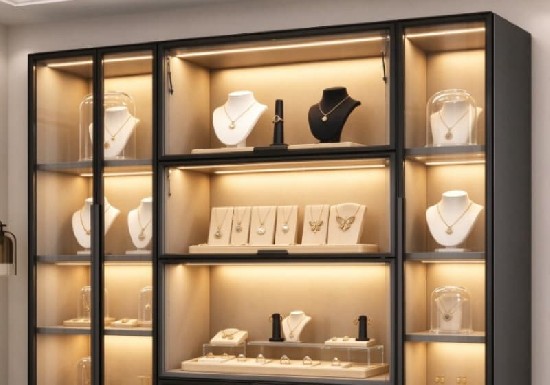
Jewelry Store Design Parameters & Features
1. Layout & Spatial Zoning
• Multi-functional zoning: Clear division into public display areas, semi-private consultation zones, and private VIP lounges to meet different customer needs.
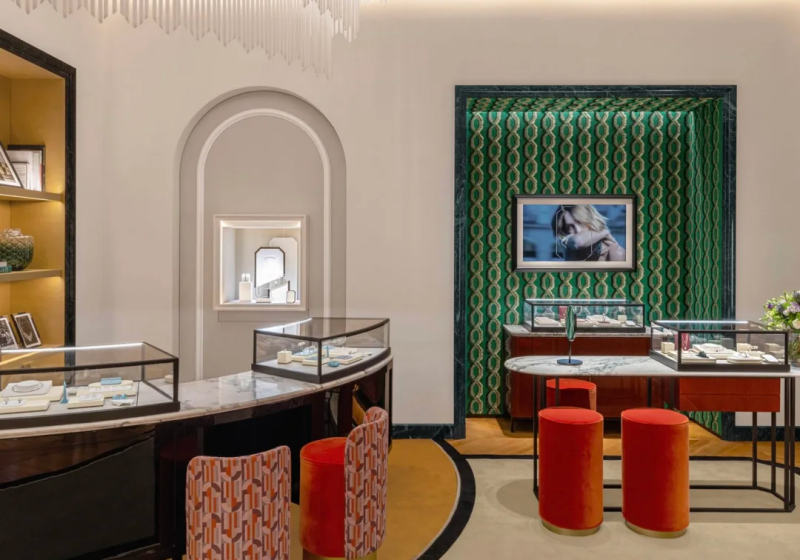
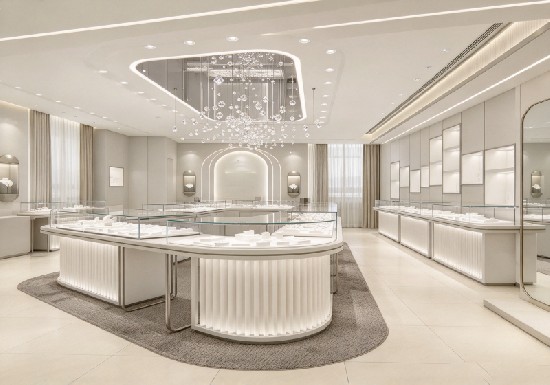
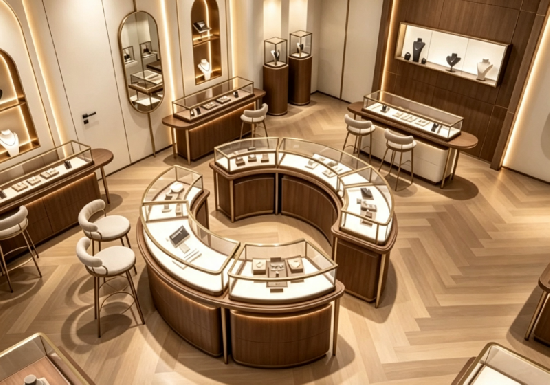
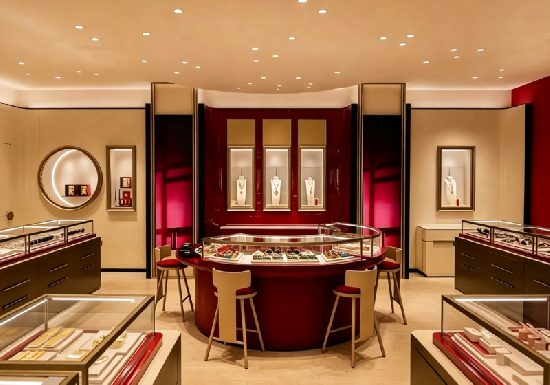
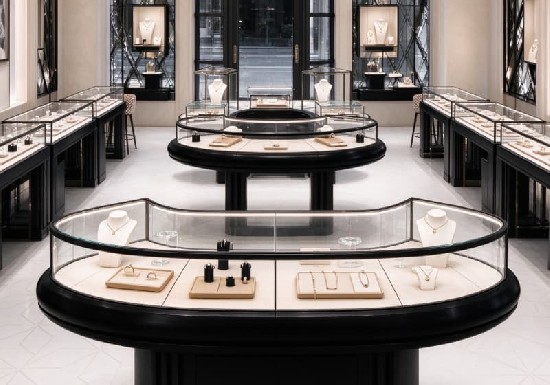
• Circulation design: Smooth, unobstructed flow paths guide customers through the space, with central display islands (e.g., hexagonal showcase) as visual focal points to enhance exploration.
• Flexible partition: Modular wall systems with geometric wood paneling create semi-open private spaces while maintaining overall spatial connectivity.
2. Display Case & Furniture Design
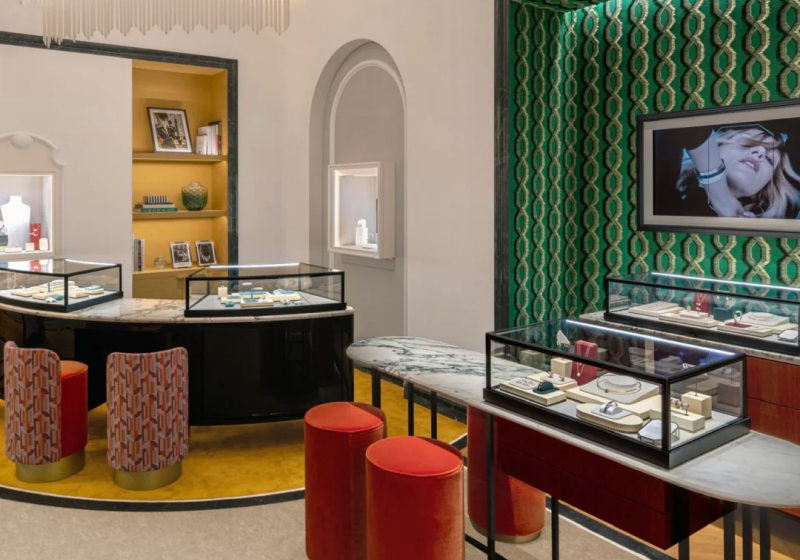
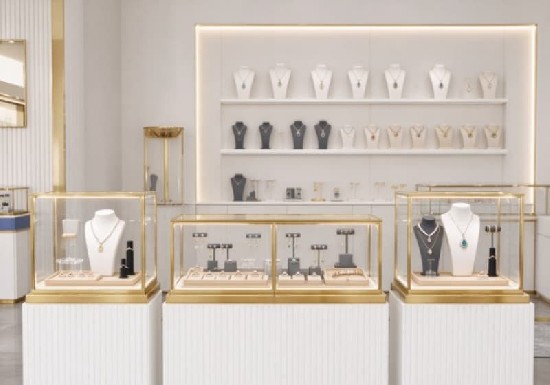
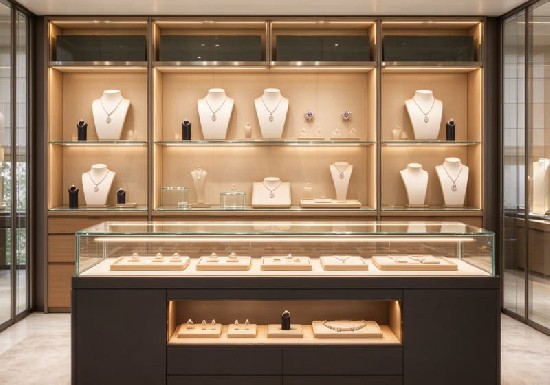
• Diversified showcase types: Hexagonal central island displays, curved marble-topped counters, and wall-mounted glass cabinets, all with integrated LED lighting to highlight jewelry.
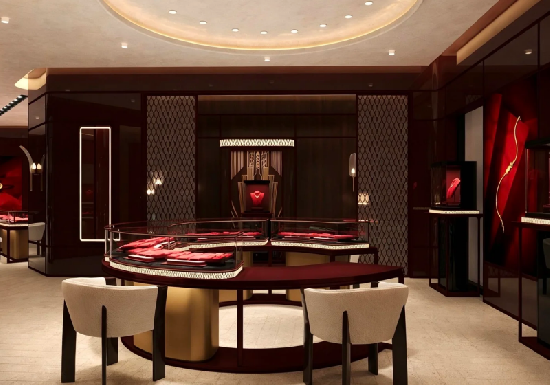
• Premium material combination: High-gloss wood, polished marble (white/black veined), stainless steel, and tempered glass, balancing durability and luxury.
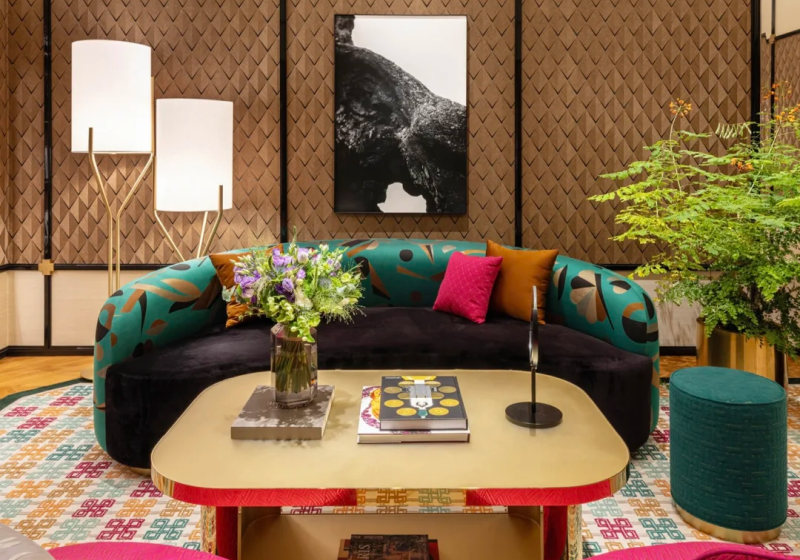
• Ergonomic design: Counter heights optimized for customer viewing and sales operation, paired with comfortable upholstered seating (velvet stools, curved sofas) for extended consultations.
• Art Deco-inspired details: Geometric wood carvings, curved silhouettes, and brass accents on furniture reflect classic luxury aesthetics.
3. Lighting System
• Layered lighting strategy:
Ambient lighting: Recessed ceiling downlights, cove lighting, and decorative chandeliers (circular bulb fixtures, crystal fringe pendants) create a warm overall atmosphere.
Accent lighting: Built-in LED strips in display cases, spotlights for wall showcases, and focused illumination on key jewelry pieces to enhanhance brilliance.
Decorative lighting: Statement chandeliers and wall-mounted fixtures serve as design focal points while supplementing ambient light.
• Color temperature control: Warm, neutral color temperature (3000K-4000K) to flatter skin tones and highlight gemstone sparkle without glare.
4. Material & Color Palette
• Luxury material selection: Natural marble, solid wood with geometric inlays, velvet upholstery, brass hardware, and high-end wall coverings, ensuring texture and longevity.
• Rich, cohesive color scheme:
Base tones: Warm white, cream, and natural wood tones for a timeless foundation.
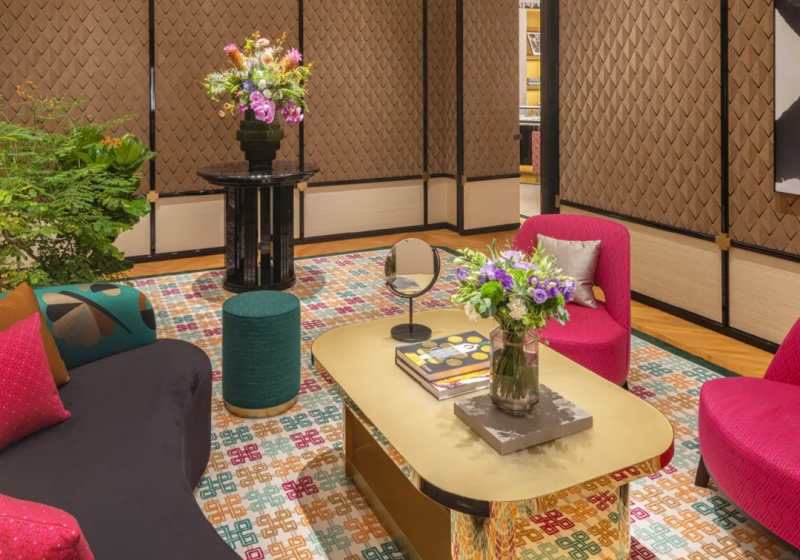
Accent colors: Bold emerald green, terracotta red, sapphire blue, and rose pink, used in upholstery, carpets, and wall panels to add vibrancy.
Neutral accents: Black marble, brass, and dark wood to ground the space and enhance luxury.
• Textural contrast: Smooth marble vs. textured wood paneling, soft velvet vs. glossy metal, creating multi-sensory visual depth.
5. Decorative & Aesthetic Elements
• Art Deco style core: Geometric patterns (diamond wood carvings, chain-link wall prints, woven carpet motifs), symmetrical layouts, and curved forms define the design language.
• Custom decorative details: Round wall mirrors, framed artworks, vintage-style display props, and fresh floral arrangements elevate the boutique atmosphere.
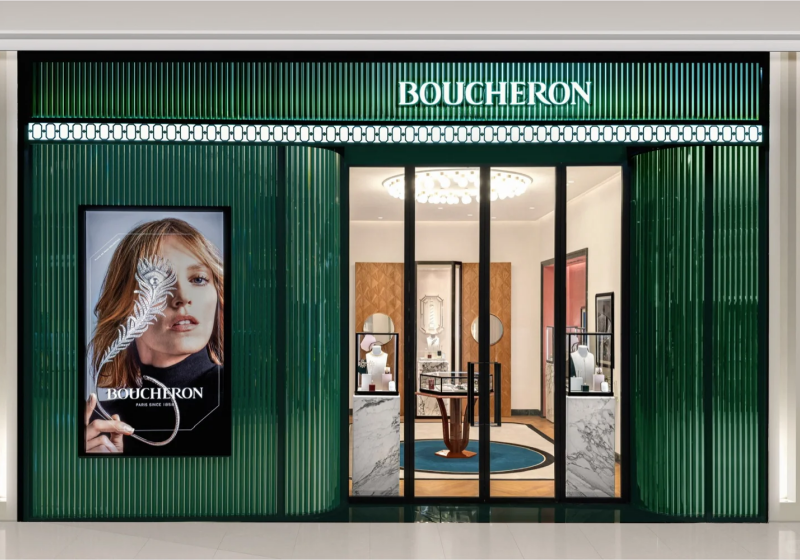
• Branding integration: Subtle logo elements and brand-themed decor (e.g., signature display stands) reinforce brand identity without overwhelming the space.
• Biophilic design: Indoor green plants (ferns, foliage) add natural vitality and soften the luxury interior.
6. Comfort & Customer Experience
• VIP lounge amenities: Plush curved sofas, custom coffee tables, and soft ambient lighting create a private, exclusive space for high-end client consultations.
• Acoustic optimization: Textured wall panels and soft carpets reduce noise, ensuring a quiet, comfortable shopping environment.
• Human-centric details: Comfortable seating, accessible counter heights, and thoughtful lighting create a welcoming, stress-free experience for customers.